- News
- /
What does hops do in beer?
There's a lot of debate in the beer world about what the most beautiful, best, most delicious flavor enhancer for beer is. There are yeast believers, malt masters, even water philosophers, but the hopheads, of course, have the monopoly on wisdom. Nothing makes a beer smell and taste as good as hops. Well, maybe more hops.
Where do the aroma and flavor of hops come from?
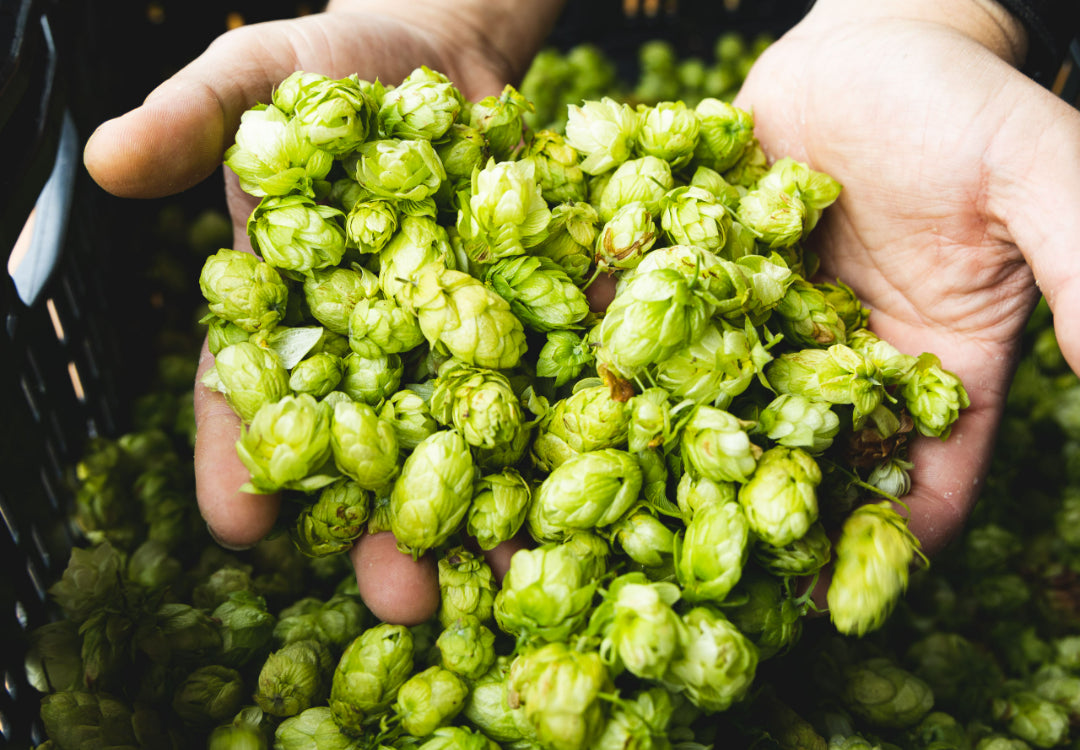
The cause of the aroma and flavor of hops is a substance called lupulin. If you tear open a (female!) hop cone, you'll see yellow granules between the leaves: that's lupulin (see photo below). If you smell those granules, or your hands for the rest of the day, you'll know what kind of aroma a beer with those hops will have: what you smell are the essential oils. Traditionally, only female hop cones are used, and male hop plants near hop cultivation are destroyed. If the hop cones are fertilized, they release less bitterness, flavor, and aroma. And those males are useless anyway.
Hops are also a great sleep aid, by the way. If you put some hop cones in a sachet under your pillow, you're said to sleep better. You also notice the sleep-inducing aroma of hops during hop picking. People who spend too long in a hop field might fall asleep among the vines: this is called hop picker's disease. People also sometimes get headaches and irritated skin.
Want to experience what it's like to pick hops yourself? Every year in September, we harvest our own hops, Klophop, together with hundreds of other hop farmers. Read more about why, how, and when we do this here.

Before hops, there was gruit
Gruit was once the secret flavor enhancer and preservation hero of beer, long before hops took over. This mixture of various herbs and plants, such as bog myrtle, rosemary, laurel, and sometimes even yarrow or juniper berries, varied by region and local traditions.
In the Middle Ages, gruit was so important that special gruit rights existed. These laws forced brewers in many European areas to buy their gruit exclusively from recognized gruit houses, led by the gruitheer, a term that later corrupted to 'de Gruijter', which later became a grocer. This was not only intended to guarantee the quality of the beer, but it also, of course, lined the pockets of the local nobility.
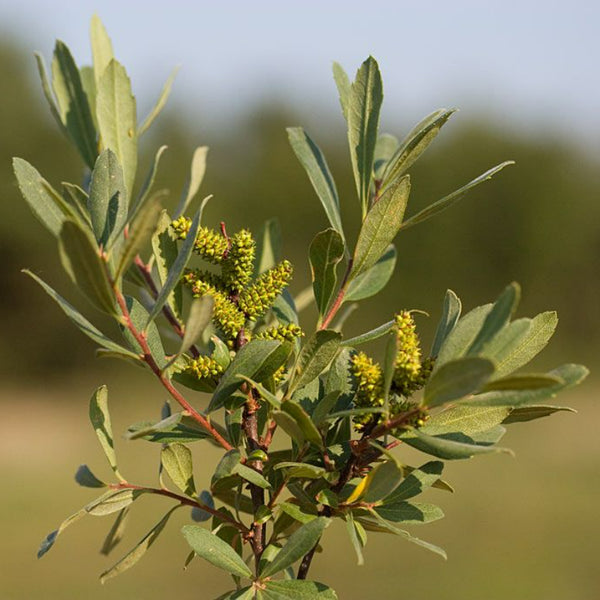
One of the ingredients in gruit was often bog myrtle (see photo below). According to a myth, bog myrtle can have hallucinogenic effects. To avoid this, it was claimed that bog myrtle had to be picked by naked witches during a full moon. This colorful folklore reflects the mystical and sometimes mysterious nature of ancient brewing traditions.
Then there were hops
The power of gruit lay in its ability to flavor beer and extend its shelf life, thanks to the antimicrobial properties of the herbs. But when hops appeared on the scene, with their superior preservation capabilities and a more attractive, consistent flavor profile, the era of gruit slowly began to disappear. Hops took over and became the standard ingredient for brewing beer.
Where does bitterness in beer come from?
Bitterness in beer, and the shelf life of beer, are caused by the alpha acids in hops. The higher the alpha acid content, the higher the bitterness. This content can vary enormously between hop varieties, but also within a single hop variety, depending on where the hops grow and what the weather is like. As a brewer, you therefore have to carefully consider the alpha acid content of the batch of hops you buy and not just rely on the name of the hops.
By the way, hops don't grow everywhere in the world; it's a picky herb. You only find the hop plant between the 35th and 55th degrees of latitude, on both sides of the equator. That's good to know. And when spring arrives, the hops shoot into the sky. Literally. Hops grow so fast in spring and summer that you can sometimes see them grow: sometimes up to 30 centimeters a day. Until the end of June. After the summer solstice, the hop plant decides to put its energy into the hop cones instead of growing taller. And that's when the aroma and flavor are created.
Want to see this happen in your own garden? Every year we distribute cuttings of our own hop variety: Klophop. Read here how you can get such a cutting.

Where do those fruity flavors in beer come from?
Alongside bitterness, the aroma and flavor of hops have now become equally important. Ever since American brewers revived the IPA, we've been bombarded with aromas from the entire fruit basket. From lime to grapefruit, from mango to papaya, from coconut to prickly pear. You name it, and hops deliver that aroma and flavor.
How do you choose hops for beer?
Driven by the hype of fruity aromas and flavors, hop growers around the world naturally started looking at what else they could cultivate and grow. And brewers began experimenting with mixtures of these different hops. What if you combine two, three, four, or even seven of these hops? What does that do to the taste? And, of course, single-hop beers are brewed to see what that specific hop variety does to the aroma and taste.
What's cool, and what makes it difficult for brewers, is that the terroir is very decisive for the intensity of the aroma and taste of the hops. Where the hops grow: the composition of the soil, how the wind blows, how much sun it gets. Everything matters. So there is obviously a difference whether a Citra hop grows in the Netherlands or in the United States. But it also matters whether that hop in the US grows on an east slope or a west slope. Every batch must therefore be tested to see if it produces the desired effect.

Quality control
Such an aroma and taste test naturally applies to all hop varieties. Even the grassy, or savory (think garlic), or gasoline-like aromas must be smelled and tasted exactly as the brewer intends. All this to ensure that when we say there's mango to taste in a beer, you actually taste mango. If we have to travel to the US to test the hops on site, we do it. We'd do anything for you. And for the beer.
Every year, we travel to Yakima Valley in Washington state, where Yakima Chief Hops is located. This is a (hop) farmers' collective with a great reputation in the hop world. There, every year, we select exactly which section of the hop field our hops will come from for the upcoming year. We do this to ensure that we get precisely the flavors and aromas in a hop variety that we are looking for.

American hops
Why do we actually use American hops? Well, we have three good reasons for that.
Aroma and taste
American hops add unique aromas and flavors to our beer. It's like a party for your taste buds, with fruity explosions, fresh citrus notes and subtle spicy nuances. It just makes our beers irresistibly delicious.
Bitterness and balance
Besides the great aroma and taste, American hops also contribute to the bitterness of the beer. They provide that perfect balance between sweetness and bitterness, making every sip a delight for your taste buds.
Innovation and creativity
American hops offer brewers an endless variety of flavor profiles to play with. We can experiment and create new combinations, allowing us to always offer surprising and unique beers. It keeps us creative and ensures that you can always discover something new in your Hazy Weekend, for example!

How do brewers use hops?
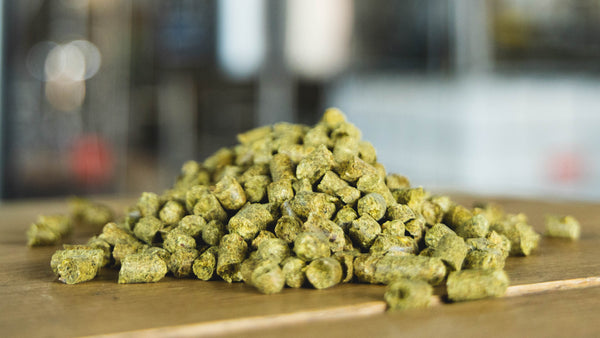
So far, you've mostly seen pictures of hop cones. Although they always look delightful for a photograph, this is usually not the form in which we use hops during brewing. The form we use hops in far most often is in pellet form. These are small granules of pressed hop cones. This ensures that the hops remain fresh longer, are easier to transport, and that we, as brewers, don't have to constantly lug around crates of hop cones.
A few times a year, we do brew with fresh hop cones. For example, during the brewing of our Klophop in September. Additionally, we are increasingly brewing fresh hop beers. Want to know exactly what that entails or when and where you can taste them? Read it here!
Did you know that as a brewer you have even more ways to use hops during your brewing process? For example, in liquid form. Read here everything about what liquid hop exactly is and how we use it.
Hops are king. We love to play with hops to brew the most beautiful IPAs. Without all those wonderful hop varieties, there would be no tropical fruit and citrus in the Frisky, no pineapple in the Hazy Weekend, no peach and lemon in the Hop Art. But also: without the classic German hops, no Broeders. Because every beer needs its own hop flavor. And every beer drinker does too!