- News
- /
What is the difference between witbier and weizen?

We all know that Germans have no sense of humor; in that regard, they are very similar to beer judges. In beer competitions, beers are judged based on their beer style. If a beer doesn't fit the description of its style, it will never win an award. Ruthless. But fortunately, we don't brew to win awards. We brew to drink delicious beer! And then you come up with a witbier/Weizen combo, for example.
What is witbier?
If you want to start mixing styles, you need to know what you're combining. So, you first need to know what a witbier is. If you open the beer encyclopedia to the letter 'W', it states that a witbier is light in color and cloudy. The aroma is sweet and grainy with notes of coriander seed and citrus. In the taste, that coriander and citrus come back stronger, with a tart (that's a fresh, slightly sour) aftertaste. A refreshing beer, in other words.
Did you know that the 'wit' (white) in witbier actually has nothing to do with the color of the beer? It refers to the wheat traditionally used in brewing; specifically, unmalted wheat, which is also known as 'white wheat'. So, contrary to what the name suggests, 'witbier' is primarily about the production method and the ingredients used, not about the color of the beer itself.
What is Weizen?
Okay, we now know what a witbier is, so let's study Weizen. We flip back a few pages in our encyclopedia and read that a Weizen should be golden-yellow and also cloudy. If you smell the beer, you can find banana and clove, and some wheat. The taste is full and creamy, and also gives off some banana and clove. This beer is also a bit tart, which makes it perfect for enjoying in the sun on a terrace.
By the way, Weizen simply means 'wheat' in German, which immediately explains why this beer is called that. It's packed with wheat instead of the usual barley, which makes for a nice light and refreshing beer with a unique twist of banana and clove. So, the name 'Weizen' actually tells you what to expect: a wheat-rich, flavorful party in your glass!

The difference between witbier and weizen.
So, to briefly summarize. Witbier and Weizen are both cloudy beers but differ in taste and origin: witbier, from Belgium, has a mix of citrus and coriander, while Weizen, a German style, has flavors of banana and clove. The main difference between the two lies in the yeast strains used, resulting in different flavor profiles: witbier is spicy and lemony, Weizen is fruity and spicy.
Want to know more about what yeast is and what it does in beer? Read it here.
Witzige Weizen
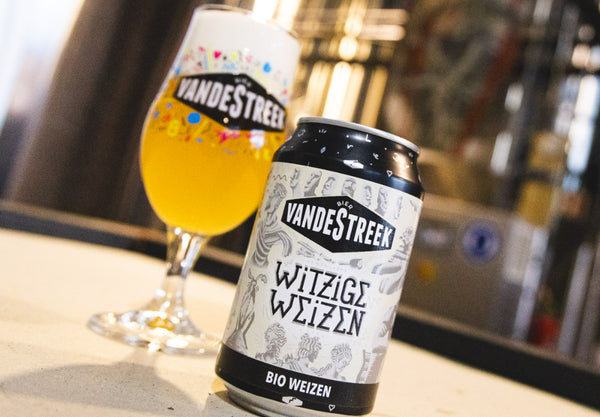
We love to do things a little differently. So, when we decided to brew a Weizen, we thought: how can we make this typically vandeStreek? The answer? Witzige Weizen! The best of both worlds: witbier and Weizen. A super drinkable blend that pairs the creamy texture of a Weizen with the fresh notes of coriander from a witbier. To give it an extra kick, it's brewed with rye, in addition to the barley of the witbier and the wheat of the Weizen. This beer truly has everything for a moment of pure enjoyment on the terrace.
Brewing organic beer
And as if this beer wasn't special enough, we also brewed it organically. With natural ingredients, that is. Hops and malt grown without artificial fertilizers or pesticides. This is, of course, much better for the environment, as it doesn't burden the ecosystem. We naturally want to continue brewing beautiful beers for a long time to come. So, good for us, good for the environment, and good for your beers. Want to know more about organic brewing? Check out this blog!