- News
- /
Is dark beer always heavy?
Is light beer always low in alcohol and dark beer always high in alcohol?
At some point, the idea that light-colored beers are low in alcohol and dark-colored beers are high in alcohol became ingrained in the collective consciousness. It sounds logical: light is light, and dark is heavy. Yet, it's utter nonsense. Color and alcohol content have nothing to do with each other. Just look at a strong blond or a tripel: light in color, but you won't just down them easily.
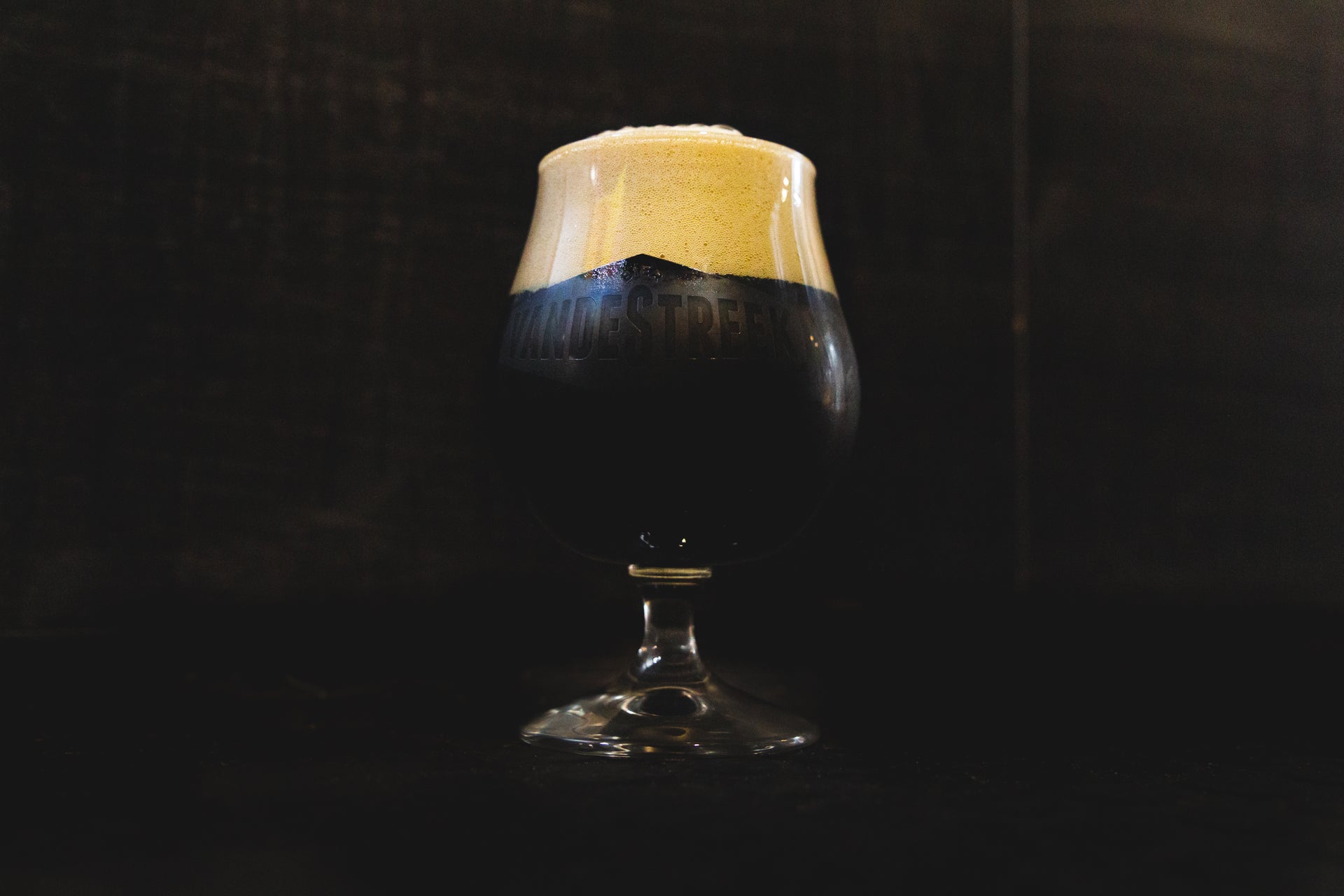
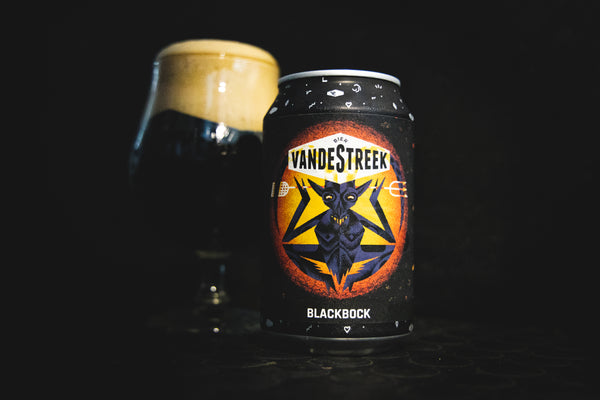
So, dark beer is not automatically heavy either. Take, for example, our Blackbock. A pitch-black bock/porter, yet with a modest alcohol percentage of 6%. So, it's quite low in alcohol but bursting with flavor. And that flavor does relate to the color: because both come from the malt.
How is malt used to give beer color and flavor?
Malt is therefore an important flavor and color enhancer, and this has to do with the drying of the malt. The strange thing is: first, the malt is moistened to allow the grain kernels to germinate. However, before that germination continues, the germination process is stopped, and the malt is dried. This process is called kilning. After that, the malter has the choice to dry the malt a bit longer, at (increasingly) higher temperatures. This allows the malt to caramelize and even acquire coffee or chocolate notes.

What are the different types of malt and how do they influence beer?
A brewer chooses malts from different grains for their beers, but also with different color tones. Pilsner is brewed primarily with very light malt. Our Zonnesteek, also a lager, is brewed with partially caramelized malt, and stouts with partially dark chocolate malt. There are also maltsters who kiln the malt with a fire of birch or oak wood and let the smoke penetrate the grain: this creates smoked malt. And you can taste that smoke in your beer. Turf 'n Surf is brewed with smoked malt.
What is the difference between stout and porter?
The reason why light beer being light in color is so deeply ingrained in our collective memory is actually due to the invention of pilsner. Only then did light-colored beer become popular. Up until the 18th century, beer was dark, as roasted malts were used. Particularly in England, dark beers were brewed: porters and stouts. The story goes that a stout was a heavier variant of the porter: the stout porter. And heavy was around 5%. A porter was even lighter. This was also necessary, as it was the thirst quencher for the dockworkers who had to move all the packages.
How are heavier variants of stouts and porters made?
Meanwhile, the alcohol percentages of stouts and porters vary widely. A porter is often not much lighter than a stout anymore, certainly not in color. These dark beers preserve better than light beers, especially if they are a bit higher in alcohol. Beers that are a heavier variant of a certain beer style are now called double or imperial. So, a heavier IPA becomes a Double IPA or Imperial IPA, and a heavier stout an Imperial Stout.

Why is it called Imperial Stout?
That imperial (which is where imperial comes from in this case) comes from the Russian court. There once was a ruler (tsar) of 'the Russian Empire' who really appreciated English Stouts, but he preferred them a bit stronger. Asked and brewed, Russian Imperial Stouts were made and shipped to Saint Petersburg and to what are now the Baltic states. And with that, you also know why certain heavier porters are called Baltic porters.
How are beers aged in barrels?
Meanwhile, even heavier variants of stouts and porters have been created by aging them in barrels that previously held spirits. The chocolate and coffee notes of stouts, for example, pair well with the aroma and flavor of the whiskey, bourbon, or rum from the barrels in which they mature. This gives a brewer even more choices to play with the taste of a beer. And not only with stouts, but it also works well with quadrupels, barley wines, and even sours. In our Barrel Collab Series, for example, you'll find six very different beer styles that we've aged in the most unique barrels.

Is dark beer always high in alcohol?
Many dark beers are indeed heavy, but this is certainly not always the case. The dark malt itself already gives enough flavor to the beer to keep it low in alcohol. Just look at stouts, porters, black IPAs, and for example Blackbock. These are dark beers that you can also make non-alcoholic. Light and dark at the same time!

Dark non-alcoholic beer
To further emphasize this entire story, we're even delving into the extremes of beer brewing! Annually, we experiment with unique, non-alcoholic specials. The first dark non-alcoholic we brewed was also the world's first non-alcoholic bock: 'Bock jij of Bock ik'. We then introduced 'Pony Play', a non-alcoholic stout. Nowadays, we regularly brew new batches of 'Hard Pour', a stout filled with nitrogen and, of course, non-alcoholic. Make sure to keep an eye on our non-alcoholic range, as new and surprising beers are constantly flowing from our tanks that you definitely don't want to miss!
Want to know more about the brewing process? Read more here.