- News
- /
Canned or bottled beer?
Whether you are a seasoned beer connoisseur who enjoys discovering new beers or simply enjoy an occasional cold beer on a warm summer day, the packaging of your beer plays an important role in your beer experience. And then the question naturally arises: 'beer from can or bottle'.
In this blog, we take you through the story of cans, bottles, and kegs of beer. Because which packaging is best for beer? Read on for the answer!
What should you consider when packaging beer?
What influences beer from a can or bottle? Beer dislikes a few things. Or rather, you dislike beer that has experienced light, oxygen, and heat in its life; it spoils faster. Let's go through them all.
Light
Light, and especially UV light, is the enemy of beer. When beer is exposed to this light for too long, it can lead to an unpleasant taste in the beer. Beer sommeliers also call this taste 'light-struck'. For these reasons, most beer bottles are dark in color, limiting the amount of light that reaches the beer. So what works better? Beer from a can or bottle?
If you use a lighter colored bottle, such as green, the chance of your beer developing a 'light-struck' taste increases. If beer is in a keg or can? Then the beer already has the advantage that light cannot enter.

Oxygen
Another culprit when it comes to beer quality is oxygen. Exposure to oxygen can lead to oxidation, making the beer stale and cardboard-like. To prevent this as much as possible, the packaging is filled with CO2 during filling, which leaves less room for oxygen. Most filling lines not only fill with CO2 but also actually remove oxygen from the bottle or can. Read on to find out if beer from a can or bottle is more airtight!
Temperature
Temperature fluctuations can be disastrous for your beer. Beer that is often exposed to varying temperatures can deteriorate in quality. This is also something you want to prevent as much as possible. What works better, beer from a can or bottle? The warmer packaged beer gets, the more chance there is for oxygen to bind and thus oxidize the beer. Cans cool faster but also heat up faster – so be careful!
Cleaning
All tanks, pipes, filters, taps, and so on in the brewery are spotlessly clean. Everything must be perfect, whether you drink beer from a can or a bottle. If this is not the case and a wrong yeast cell or bacteria is still alive somewhere, an infection can occur, making the beer stale, sour, or tumultuous, causing it to continue fermenting and spoil much faster.
This is not what we want, which is why we are constantly cleaning throughout the entire process. To be absolutely sure that all our beers are of the quality we strive for, each batch is also checked for contamination in a laboratory.

What is the best packaging for beer?
Now that you know what to look for when packaging beer, we can see how the different packaging options deal with the 'enemies' of beer.
Glass bottle
Glass bottles have long been the absolute favorite for packaging beer, but what are the advantages of beer from a bottle? They leave no taste and protect the beer relatively well against oxygen and light, provided the glass is dark. A green, white, or blue bottle will let in more light, so the beer is not as well protected against light.

Cans
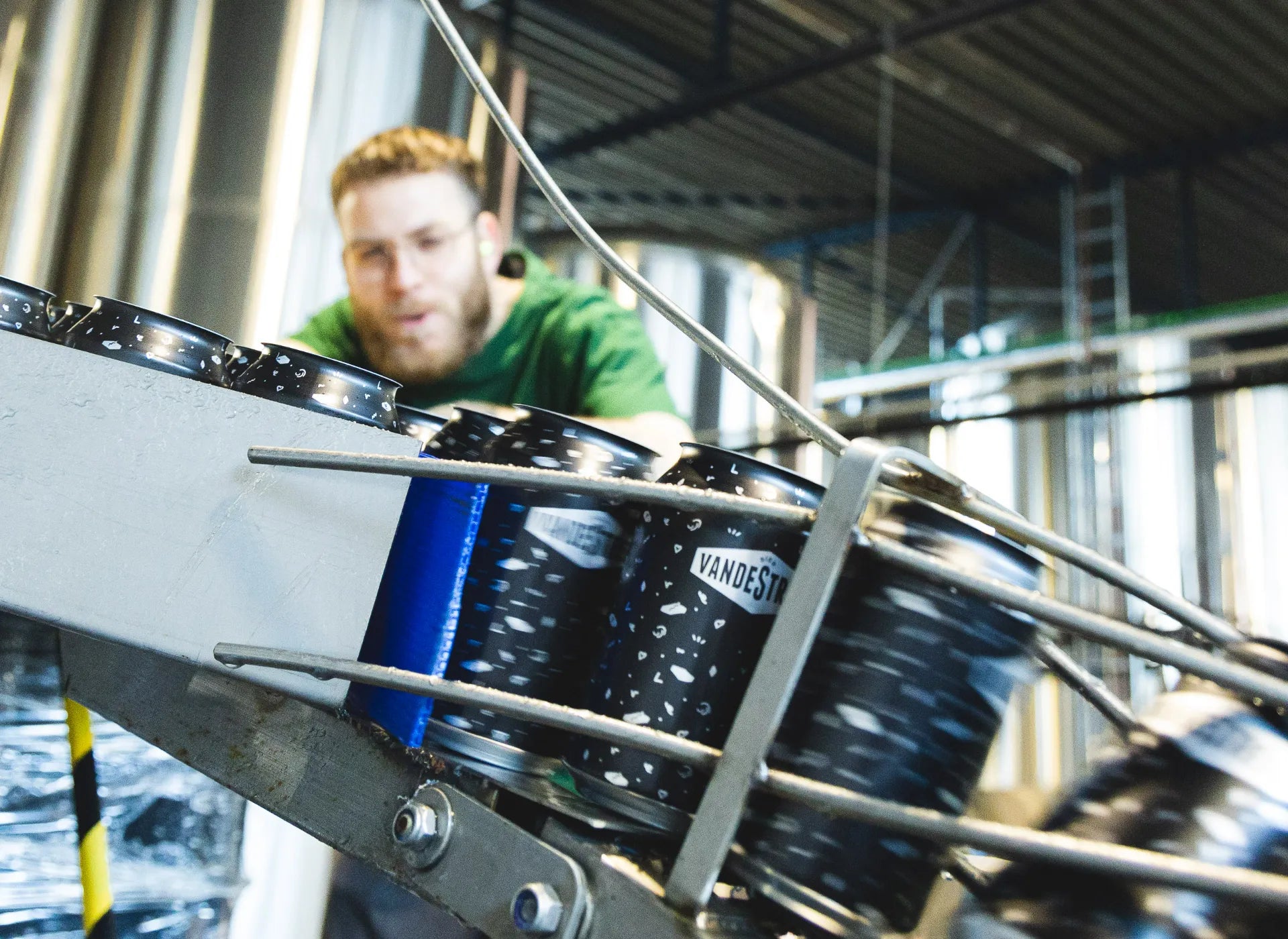
Cans have gained a lot of ground in the beer industry in recent years. So what are the advantages of beer in a can? Because cans offer a few very important advantages. In fact, a can is like a fortress for your beer. It completely keeps out light, so no single ray of light can affect the quality of the beer.
Cans also have minimal 'headspace' when filled. This is the space in a can where there is no beer. We can make this space in a can super oxygen-free. This means there is less chance of oxidation. Also, a can is completely 100% airtight, so no oxygen from outside comes into contact with the beer.
Beer in a can" where tradition and innovation come together in every sip.
A can is also 100% airtight, meaning no external oxygen comes into contact with the beer. Other nice advantages are the shape and weight of a can. Cans are made of aluminum and are therefore incredibly light. The cylindrical shape of the can also ensures that all space on, for example, a pallet or in a box can be optimally utilized.
This means more cans can fit on a pallet or in a box, which saves on transport. Also, more cans fit in your refrigerator, and they also get cold faster because aluminum is thinner than glass and is a good conductor. In addition, aluminum is also recyclable. Can is clearly the winner of the question beer from can or bottle? Are you already craving the vandeStreek collection? Then quickly check out our webshop!

Kegs
The ultimate way to enjoy beer is to drink it from a keg, especially when compared to beer from a can or bottle. A keg offers all the advantages of a can, but on a larger scale. In addition, there is even less oxygen per liter in a keg, which benefits its shelf life. We use steel deposit kegs that we clean ourselves after use and reuse for the next beer.

Beer from a can or bottle?
You usually don't drink beer directly from a can, bottle, or keg, but from a glass. Therefore, the best packaging for beer leaving the brewery is a keg. Since we understand that you might not have space in your fridge for an entire keg, when choosing between beer from a can or a bottle, we still prefer beer in a can. In a can, your beer stays of the best quality for the longest time, it gets cold faster, and it's easier to take with you. If no can is available? Go wild and grab a bottle!
Make sure you always pour your beer into a glass! An important part of enjoying beer lies in its aromas, and these are harder to smell when you drink directly from a can. Want to know which glass you should use? Read about it in the blog: which beer in which glass?